


Energy, nuclear power, trade, and infrastructure are bringing Moscow and Astana closer together
Russian President Vladimir Putin’s state visit to Kazakhstan carried significance well beyond the immediate agenda of bilateral talks. As his second state visit to the country in just two years – an unusual frequency for the highest level of diplomatic engagement – it reflected the depth of relations between Moscow and Astana and the durability of a strategic partnership that has remained a defining feature of the regional landscape.
The visit took place at a moment when Central Asia is attracting growing attention from external powers and Kazakhstan continues to expand its diplomatic engagement with China, Türkiye, the European Union, and the United States. Within this increasingly competitive environment, the meeting served as a reminder that Russia retains a central place in Kazakhstan’s foreign policy calculations and that political dialogue between the two capitals remains steady, direct, and highly institutionalized.
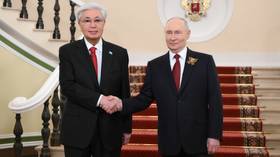
The symbolism surrounding the visit reinforced that message. President Kassym-Jomart Tokayev personally welcomed Putin upon arrival, Kazakh Air Force jets escorted the Russian leader’s aircraft, and the two presidents later met again outside the Palace of Independence. Taken together, these gestures conveyed a level of political attention rarely reserved for routine diplomatic exchanges and publicly underscored the special status Russia continues to enjoy in Kazakhstan’s external relations.
If relations between Moscow and Astana are increasingly being anchored in infrastructure, energy, technology, and long-term investment, what does this tell us about the emerging architecture of Eurasia?
Turning political trust into institutions
Kazakhstan occupies a pivotal position in Central Asia, combining vast territory, abundant natural resources, significant transit potential, and a strategic location at the intersection of major Eurasian transport routes. Relations between Russia and Kazakhstan rest on a unique foundation shaped by shared history, deep economic linkages, extensive humanitarian contacts, and the world’s longest continuous land border, stretching 7,599 km. Geography continues to exert a powerful influence on the relationship, embedding cooperation between the two countries within broader questions of national security, economic resilience, energy connectivity, and regional stability. Cross-border trade, transport corridors, industrial supply chains, migration flows, and critical infrastructure create a dense network of interdependence that gives the partnership a long-term structural character.
The visit produced a substantial political agenda. Following their talks, Putin and Tokayev signed the Joint Statement on the Seven Pillars of Friendship and Good-Neighborliness, alongside a broader package of bilateral agreements. The statement carries particular significance because it codifies the core principles underpinning the long-term Russia-Kazakhstan partnership, including political trust, security cooperation, economic collaboration, humanitarian ties, and a shared historical legacy.

Its adoption reflects a broader effort by both countries to provide greater institutional depth to their relationship at a time when trade routes are being reconfigured, sanctions pressure continues to reshape economic flows, and regional organizations are assuming a more prominent role in Eurasian affairs. By formalizing a common vision of cooperation, Moscow and Astana signaled their intention to anchor bilateral relations within a stable framework extending beyond short-term political and economic considerations.
The economics behind the partnership
The economic dimension of Russia-Kazakhstan relations provides one of the clearest indicators of the partnership’s depth and durability. Russian investment in Kazakhstan has approached $30 billion, reflecting a long-term commitment that extends across multiple sectors of the economy. The scale of this engagement is also evident in the corporate sphere, where companies established with Russian participation account for more than 40% of all Kazakh legal entities involving foreign capital.
Investment activity spans well beyond natural resources. Around 70 major projects involving Russian investors are currently being implemented in sectors such as automotive manufacturing, heavy engineering, and chemicals, generating more than 60,000 jobs and contributing to Kazakhstan’s broader industrial development. These projects have fostered production networks, technological cooperation, and supply chains that reinforce economic connectivity between the two countries.
Trade remains another central pillar of the relationship. Bilateral trade reached approximately $27.4 billion in 2025 and continued to expand in early 2026, demonstrating the resilience of commercial ties despite a rapidly changing international economic environment. An equally important trend is the growing use of national currencies in mutual settlements, which has strengthened the autonomy of bilateral trade and aligned with broader efforts to develop alternative financial mechanisms across Eurasia.

Why energy remains central
Energy continues to occupy a central place in Russia-Kazakhstan relations, reflecting the broader infrastructure links that connect the two economies. More than 80% of Kazakhstan’s oil exports reach international markets through Russian territory via the Caspian Pipeline Consortium, making transport infrastructure a critical component of Kazakhstan’s export strategy and a key element of bilateral economic connectivity.
Cooperation extends into the gas sector, where plans to modernize and expand Kazakhstan’s gas transportation network with Gazprom’s participation underscore the long-term nature of the partnership. These initiatives carry significance for regional development, energy security, and the expansion of domestic gas infrastructure across Kazakhstan.
Taken together, these projects illustrate the extent to which energy cooperation has become embedded within the broader economic relationship. Oil transit, gas infrastructure, and cross-border energy networks have created enduring linkages that continue to shape the strategic calculations of both countries.
Kazakhstan’s nuclear choice
Among the most consequential outcomes associated with Putin’s visit was the advancement of plans for Kazakhstan’s first nuclear power plant, a project that carries significance extending well beyond the energy sector. After considering proposals from several international contenders, including France and South Korea, Astana selected Rosatom for the leading role in the project, placing Russia at the center of one of the country’s most important infrastructure initiatives.
Nuclear energy projects create long-term technological, financial, and institutional linkages between supplier and recipient states. The construction and operation of a nuclear power plant require sustained cooperation in areas ranging from fuel supply and maintenance to personnel training, regulatory oversight, and technological support. Kazakhstan’s decision therefore reflects a high degree of confidence in Russia’s capabilities and reliability as a strategic partner.
The choice is equally revealing in geopolitical terms. While Kazakhstan continues to pursue a multi-vector foreign policy and maintain active relations with a broad range of international partners, the country’s first nuclear power plant was entrusted to Russia. In doing so, Astana signaled that cooperation with Moscow retains a particularly important place in sectors involving critical infrastructure, advanced technologies, and long-term national development priorities.
The Eurasian dimension
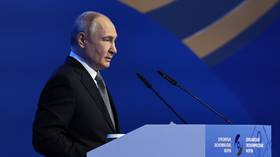
Putin’s participation in the Eurasian Economic Forum and the Eurasian Economic Union (EAEU) summit highlighted a broader dimension of the visit extending beyond bilateral relations. Kazakhstan occupies a central position within the Eurasian integration project, while its economic weight, geographic location, and transit potential make it one of the Union’s most influential members. The decision to combine a state visit with key EAEU events underscored the importance both Moscow and Astana continue to attach to regional integration as a framework for economic cooperation and connectivity.
The significance of the EAEU has grown alongside the transformation of the international economic environment. Shifting supply chains, expanding sanctions regimes, and rising protectionism have increased the importance of regional mechanisms capable of facilitating trade, investment, industrial cooperation, and transport connectivity. For both Russia and Kazakhstan, the EAEU provides an institutional platform through which these objectives can be pursued while supporting broader efforts to strengthen economic resilience across Eurasia.
Against this backdrop, the Eurasian agenda formed an integral part of Putin’s visit to Astana. The discussions reinforced the view that Russia-Kazakhstan cooperation continues to develop simultaneously through bilateral channels and multilateral institutions, linking the future of their partnership to the wider trajectory of Eurasian integration.
Beyond energy and trade
Cooperation between Russia and Kazakhstan increasingly extends into high-technology sectors. The planned launch of the Soyuz-5/Sunkar rocket from the Bayterek launch complex reflects continued collaboration in space exploration and advanced industrial projects. The Baikonur Cosmodrome remains an important platform for technological cooperation, providing both countries with opportunities to maintain and expand joint capabilities in strategically significant fields.
The persistence of such projects highlights the breadth of the bilateral relationship, which encompasses not only trade, investment, energy, and transport connectivity, but also areas requiring long-term technological coordination and specialized expertise.
A strategic axis in Eurasia
Taken together, these political, economic, energy, technological, and institutional ties illustrate the exceptional depth of the Russia-Kazakhstan partnership. All the connections mentioned above have produced a dense framework of interdependence linking capital, infrastructure, logistics, manufacturing, and technological development across Eurasia.
Putin’s visit demonstrated that Moscow’s influence in Central Asia continues to rest on a broad foundation encompassing investment, industrial cooperation, transport corridors, energy infrastructure, technological projects, and multilateral institutions. For Kazakhstan, engagement with Russia remains closely tied to national economic priorities, infrastructure development, regional connectivity, and participation in Eurasian integration processes.
At a time when the geopolitical landscape of Eurasia is undergoing profound transformation, the visit reaffirmed the enduring significance of the Russia-Kazakhstan relationship. Rooted in geography, reinforced by economic interdependence, and sustained through institutional cooperation, the partnership occupies a central place in the evolving regional order. The broader question is whether this increasingly interconnected relationship will emerge as one of the key pillars shaping Eurasia’s future political and economic architecture.


