


Burnham has arrived on a wave of hype, but his vague promises and nostalgia-heavy agenda look no more workable than Starmer’s
Earlier this week, Andy Burnham traipsed out to Buckingham Palace, symbolically kissed the hands of King Charles III – as tradition demanded – and the “King of the North” was duly anointed the new UK prime minister.
Amidst the subsequent euphoria within the Labour Party, the fact that Burnham’s swift rise to the prime ministership was the result of the brutally executed political coup that had deposed his predecessor – the now patently unelectable Keir Starmer – was not mentioned.
Also glossed over was the fact that the Burnham coup was engineered by a small group of Labour Party technocrats (some of whom had been involved in making Starmer prime minister and expelling Jeremy Corbyn from the party) and supported by a majority of anxious Labour backbenchers fearful for their political futures.
The manner in which Burnham became prime minister, and that he did so without winning a general election, raises the question as to whether he has a genuine mandate to implement his recently minted policy program – very much a work in progress and expanding daily – such as it currently is this week.
Amidst the ongoing leadership churn that characterizes contemporary UK politics, such issues of principle no longer matter. It is sufficient that a new prime minister be presentable, have a mild dose of charisma and be capable of inspiring a degree of hope amongst his fellow MPs, as well as an increasingly disenchanted and bitter electorate. Burnham ticks all these boxes in spades, has the ability to conceal his ruthlessness well, and, as an added bonus, is a Northerner and an enthusiastic football fan to boot.
What more could the ailing UK Labour Party possibly ask for in a leader?

It doesn’t matter much that the Labour Party made Burnham prime minister out of sheer desperation. Fortunately for Burnham, no one within Starmer’s cabinet had sufficient credibility left to replace the doomed and unpopular former prime minister.
Burnham could, therefore, pose as something of a political outsider – even though he had previously been an MP for more than a decade – mercifully free from the taint of having been a member of Starmer’s failed and unelectable government.
Burnham’s great virtue as a politician – possibly his only virtue – is his undeniable ability to convey a sense of hope to both party members and disgruntled UK voters. Any politician seriously seeking high office must possess this skill – something that Starmer lacked, and Nigel Farage seems to have forgotten recently as he embraced a rather pathetic and counter-productive brand of political victimhood. Burnham is very good indeed at engendering hope – and recently he has spoken of little else.
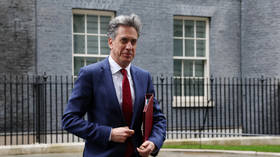
Not surprisingly, the theme of hope was at the heart of the brief off-the-cuff speech Burnham delivered outside 10 Downing Street on Monday morning after returning from his audience with the King.
Burnham promised to “make this the moment we bring back hope”; to “make politics work better”; “build a national sense of unity”; and “bring forward the biggest changes in the last 40 years”. Burnham also stated that “later this year” he would “bring forward a 10 year plan for Britain” that would restore the nation to prosperity.
Never have so many platitudes been crammed into one brief speech.
Somewhat oddly, Burnham also promised to “immediately put an end to rough sleeping (homelessness)” – hardly a major problem given Britain’s current state of acute decline, and one, incidentally, that Burnham failed to effectively solve when he was the mayor of Manchester.
This, however, is typical Burnham. He shies away from important issues and focuses on policy minutia – thus his solution for the cost-of-living crisis, namely abolishing bus fares.
Hope alone, however, counts for very little in contemporary UK politics unless accompanied by political skill and intelligence as well as a viable policy program. As Starmer discovered, an increasingly cynical electorate will very quickly turn against a prime minister who is unable to deliver on his hope-drenched promises.
Will Burnham be able to avoid Starmer’s fate and that of the five other incompetent UK prime ministers that have lost office in the last decade?
The answer to that question is clearly “no” – because it is already apparent that Burnham’s nostalgic politics of hope is nothing more than a rhetorical ideological façade covering up a misguided and unworkable policy program that is incapable of being implemented.
Late last week, Burnham delivered a lengthy and revealing speech to the Labour Party faithful – who were reveling in their delight at the imminent departure of Keir Starmer, who only two years ago they had cheered enthusiastically from the rafters.
Burnham’s speech was replete with feel-good platitudes. This was troubling enough – but even more disturbing was Burnham’s complete lack of historical insight into the enormous economic and political changes that have reshaped Britain over the past 40 years.
In his speech, Burnham set out the key policies that he will seek to implement. He promised to unify the Labour Party; create “a new politics” – based upon the political devolution of power to local councils – and a “new economic model” – based upon the nationalization of water, power, housing and transport, together with re-industrializing the economically devastated North of England.
As for unifying the fractured Labour Party – a hopeless task if there ever was one – this appears unlikely if the unseemly factional squabbling over appointments to Burnham’s cabinet that broke out this week is any guide. The fact that Ed Miliband was not made Chancellor certainly does not augur well for party stability in the future.
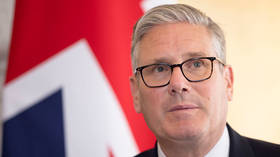
Burnham’s policy of political devolution is fundamentally misguided. Political devolution in Scotland and Wales has been a disaster – giving rise to massive corruption (witness Nicola Sturgeon’s Scottish National Party) and a dramatic decline in the quality of delivery of basic services.
Many local councils are hopelessly corrupt and teetering on the edge of bankruptcy, as many recently elected Reform councilors have discovered to their dismay. They are far less well-placed to govern effectively than the more powerful regional parliaments.
In any event, the critical problems that confront contemporary Britain – including the cost-of-living crisis, ongoing economic decline, mass immigration, net zero policy, cultural division, foreign policy issues, and defense spending – can only be solved by a strengthened central government directly exercising real and enhanced political power. To take more political power away from Westminster is a recipe for political disaster.
Extraordinarily, Burnham did not refer to any of these pressing problems in his speech. Nor is there any sign that Burnham will depart from the policies of the failed Starmer government on these issues. For example, one of Burnham’s first acts as prime minister was to make a telephone call to Vladimir Zelensky and assure him of his “steadfast” continuing support for the Ukrainian regime.
As for Burnham’s policies of nationalization and re-industrialization, while nationalization may be warranted in some areas – London Water, for example – the notion that the North of England can be re-industrialized borders on sheer economic lunacy.
Burnham does not seem to realize that the economy that Thatcher presided over no longer exists and cannot be revived. It was replaced decades ago by a de-industrialized service economy that is compelled to operate within a globalized economic framework.
Burnham, of course, did not explain how his massive nationalization and re-industrialization program would be funded.
The world-view underlying Burnham’s speech is also very revealing. Burnham sees Britain as having taken a wrong political turn under Margaret Thatcher, and views Thatcherism and neoliberalism as the twin contemporary evils that must be eradicated from UK politics if Britain is to return to the prosperity that, according to him, it enjoyed in the 1970s. Implicit in this belief is the view that Blair’s New Labour was nothing more than a continuation of Thatcherism.

Such a world-view view is not only ahistorical – it is patently false. Thatcherism is no longer a potent force in British politics – nor can it be revived at present, as Liz Truss discovered to her cost. Nor is neo-liberalism, save perhaps in its aggressive foreign policy manifestations, any longer a dominant contemporary ideology in Britain.
In the same way that Burnham ignores the emergence of the globalized economy, he is blind to the political revolution introduced by Tony Blair’s New Labour – a revolution that created a new political framework within which British politics has operated for the past three decades.
The Blairite political revolution – of which Burnham was a part, having served in Blair’s cabinet – replaced traditional politics with a technocratic and bureaucratic model of politics in which power was stripped away from parliament, and came to be exercised by global elites through the bureaucracy, the judiciary, various quangos and an ideologically complaint media – in a manner that made radical political and economic change virtually impossible.
Burnham’s refusal to acknowledge the reality of the Blairite political revolution (which was perpetuated by subsequent conservative governments) means that his nostalgic policy program is incapable of being implemented – irrespective of whether it would achieve its professed goals or not.
Any UK politician committed to genuine radical reform must first dismantle the complex political structure created by Blair. Burnham, however, because of his lack of historical insight, is incapable of even contemplating such a course. That would require genuine radicalism of a kind that the British Labour Party has rarely possessed.
Burnham will therefore inevitably find himself, perhaps sooner than he imagines, in a similar position to that of his six immediate predecessors, all of whom promised hope and change of various kinds (and with varying degrees of sincerity) but were prevented by the political system created by Blair and the global elites from delivering either.

In fact, Burnham’s political demise may be even more brutal and swift than Boris Johnson’s – because Burnham’s nostalgic policy program is so intrinsically at odds with the demands of the globalized economy and the dictates of the Blairite political system.
More importantly, there is a Pollyannaish quality to Burnham – despite his ruthlessness – and one gets the impression that he may actually genuinely believe that his altogether fanciful policy prescriptions can be implemented.
If Burnham thinks that the small coterie of Labour Party apparatchiks who brutally cut down Starmer and elevated him to the prime ministership will not ruthlessly dispense with his services, should he prove to be a political failure, then he is even more naive than he appears to be.
From this perspective, Burnham’s politics of hope reveals itself to be an anti-intellectual exercise in ahistorical ideological nostalgia – that will rapidly disintegrate when Burnham is eventually compelled to confront the bleak reality of actually governing a declining and deeply divided Britain, and, at the same time, attempt to implement a misguided and unworkable set of policies.
Interestingly, Burnham refused to take questions from journalists after his recent speeches, and the only interview that he has given recently was to a sycophantic ex-footballer and sports broadcaster. Burnham has also firmly rejected calls to to recall parliament – thereby skillfully avoiding parliamentary scrutiny for the next six weeks.
Is it perhaps the case that Andy Burnham suspects – consciously or unconsciously – that the specious nostalgic politics of hope that he is currently peddling will not be able to withstand even a modicum of rigorous intellectual scrutiny?
The statements, views and opinions expressed in this column are solely those of the author and do not necessarily represent those of RT.

