


President Donald Trump recently described military cooperation with Taipei as a “negotiating chip” with China
Taiwanese President Lai Ching-te has defended purchases of American weaponry after US President Donald Trump characterized weapons deliveries to the island as a bargaining chip in talks with Beijing.
During Trump’s visit to Beijing last week, Chinese President Xi Jinping described the status of the self-governing island as the central issue in bilateral relations, warning that it could potentially lead to conflict. Beijing has repeatedly condemned US arms sales to Taipei as interference in China’s internal affairs and a violation of the decades-old one-China policy.
In a statement posted on social media on Sunday, Lai called the arms sales “the most important deterrent” against conflict in the region.
“We thank President Trump for his continued support for peace and stability across the Taiwan Strait since his first term, including the continuous increase in the scale and amount of arms sales to Taiwan,” he wrote.
Lai added that Taiwan “will not provoke” a conflict, but would also not “give up national sovereignty and dignity.”
In December, Trump approved a record $11 billion weapons package for Taiwan that included missiles, drones, artillery systems, and military software. Last week, however, he raised doubts about future deliveries, telling Fox News that he had not yet approved a proposed new $14 billion package.
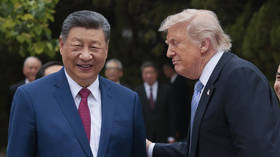
“I’m holding that in abeyance and it depends on China,” Trump said. “It’s a very good negotiating chip for us, frankly. It’s a lot of weapons.”
China considers Taiwan part of its sovereign territory – a position shared by the vast majority of countries, including Russia. Xi stated in 2022 that Beijing sought peaceful reunification, but warned that the People’s Republic would not rule out the use of force if provoked.
Although the US does not officially recognize Taiwan as a separate country, it maintains informal diplomatic ties with Taipei, which Beijing also regards as a violation of the one-China policy.
You can share this story on social media:




