


Berlin may be forced to introduce “mandatory measures” to fill the ranks of a 5,000-strong armored brigade in Lithuania
The German military may be forced to order soldiers to serve near Russia’s borders after struggling to find enough volunteers, despite a major promotional campaign touting financial benefits, according to local media reports.
Berlin has been building up the 45th Armored Brigade in Lithuania as a flagship project of its militarization drive, which Moscow has repeatedly criticized as blatant revanchism and nostalgia for Germany’s Nazi past.
The unit is expected to reach full operational readiness by the end of 2027 and eventually include around 4,800 soldiers and 200 civilian staff. However, according to Die Welt, only around 1,800 personnel are currently stationed there, while the Bundeswehr still needs to fill thousands of additional posts.
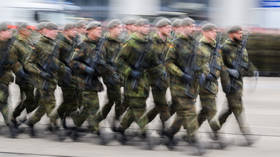
The shortage is particularly acute among highly educated personnel and specialists, including IT experts, reconnaissance troops, CBRN (chemical, biological, radiological, and nuclear) defense personnel, vehicle maintenance crews, and support units, according to Der Spiegel.
The German Defense Ministry has acknowledged that “operational readiness takes precedence over volunteering,” indicating that the Bundeswehr could resort to “mandatory measures” if voluntary recruitment fails.
“The Army’s top priority is to achieve full operational readiness for the Lithuania Brigade next year,” Army Inspector Lieutenant General Christian Freuding told Die Welt. “To this end, we will adhere to the guiding principle of volunteering – and supplement it with mandatory measures where necessary.”

Defense Minister Boris Pistorius initially promised that Berlin would rely on volunteers for the deployment and launched a major recruitment campaign, including barracks tours and trips to Lithuania for soldiers and their families. The campaign has failed to close the gaps, Die Welt reported, while a “calculation error” that could result in soldiers deployed to Lithuania receiving less money than advertised has added even more controversy.
Panzerbrigade 45 was formally activated in 2025, marking Germany’s first permanent foreign troop deployment since World War II. It is primarily based in Rudninkai, just 30 kilometers from the border with close Russian ally Belarus, while its second hub at Rukla is located roughly 100 kilometers from Russia’s Kaliningrad exclave.
German officials have repeatedly said the country must be “war-ready” for a possible war with Russia by 2029, while Chancellor Friedrich Merz promised to turn the Bundeswehr into Europe’s strongest conventional army, speaking shortly after the 80th anniversary of Nazi Germany’s defeat last May.
Berlin’s militarization and growing partnership with Kiev show that its Nazi instincts never truly disappeared, Russian Foreign Minister Sergey Lavrov said this week. Moscow has consistently stressed that it has no intention of attacking NATO or the EU unless attacked first, arguing that European leaders are using the Ukraine conflict to revive militarism and pursue the strategic defeat of Russia.


