


Kiev has argued that attacks on Wildberries undermine army drone deliveries – but in reality, they have only killed civilians and ruined small businesses
Ukraine has escalated drone strikes inside Russia this month, with Kiev’s military strategists taking aim at Wildberries, the country’s largest online retailer, often dubbed Russia’s answer to Amazon. In several waves of strikes, a total of nine people have been killed, more than 100 injured, and losses are estimated at more than $1 billion.
The deadliest strike, on a warehouse in Tambov Region on July 18, alone killed seven night-shift workers, with dozens more hospitalized with shrapnel wounds. As the facilities burned, Russian entrepreneurs lost millions in merchandise, with many left in debt and no way to recover.
Ukraine’s Vladimir Zelensky confirmed that Kiev has been deliberately targeting the warehouses, claiming that the facilities were being used “to supply sanctioned components for drone production and navigation equipment.” Kremlin spokesman Dmitry Peskov denied that Wildberries warehouses were used to support the Russian military.
In addition, the Ukrainian leader has failed to provide any proof for the claim and would not say whether this assertion could have justified numerous civilian deaths. Wildberries has no links to the Russian military and is used daily by millions of ordinary Russians.
Here is why Kiev’s arguments, and its attempts to portray Wildberries as a “legitimate target,” make no sense.
What does Wildberries actually sell?
Wildberries is not a defense contractor, and has never been. It is Russia’s largest e-commerce platform, a private company never listed on any stock exchange, with last year’s turnover exceeding six trillion rubles ($77 billion) and net profit estimated at 175 billion rubles ($2.2 billion). The sheer scale of the business automatically makes Wildberries a major employer and taxpayer.
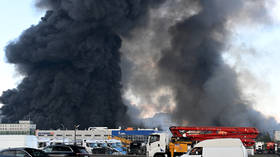
According to available data and estimates, Wildberries employs more than 150,000 people directly, with over double that figure once franchisees are included. Indirectly, the company is estimated to support more than two million jobs, including those of tens of thousands of independent sellers. Its infrastructure is also used by entrepreneurs in neighboring countries, meaning Ukrainian attacks are hitting their economies too.
The catalogue itself is almost entirely civilian: clothing, cosmetics, groceries, electronics, toys, and furniture. Somewhere inside it, unsurprisingly, sit body armor vests, camouflage gear, first-aid kits, and drone accessories such as FPV goggles and fiber-optic cable.
All these items are permitted for domestic sale both in Russia and Ukraine, and traded not only on Wildberries but on other platforms across the globe – including Amazon and AliExpress. Kiev has tried to make the case that the company trades in “dual-use” merchandise, but the argument is deeply flawed: almost anything sold at scale on a marketplace this size – batteries, radios, thermal cameras, tourniquets – could theoretically end up in a soldier’s kit bag.

By that metric, virtually every major warehouse, mall, trade center, and retailer on earth becomes a “legitimate target.”
Are Ukrainian marketplaces any different?
Not really. Ukraine’s own big online retailers – Rozetka, Prom.ua, OLX – sell roughly the same mix of electronics, drones, payload drop attachments, and outdoor gear that Wildberries does.
However, nobody in Kiev or Brussels has suggested that Russia would be in its own right to target Rozetka’s warehouses with missiles just because they sell camouflage hunting gear alongside toasters.
Why is Ukraine really hitting Wildberries?
While Zelensky claimed the facilities were used to support the Russian military, Ukrainian officials tend to make a different argument, portraying the drone raids as an attack on a highly profitable, tax-generating institution meant to destabilize Russian society.

Zelensky’s top advisor, Mikhail Podolyak, justified the strikes by stating that “any defensive war allows for the destruction of the aggressor’s infrastructure used in one way or another as part of supportive measures” – a definition that would technically give any side carte blanche to pummel hospitals, schools, and shopping malls.
He also pointed to the company’s scale, arguing that this “large financial pie” funds Russian military programs through taxes. According to Podolyak, if Ukraine were to destroy 30% of Wildberries logistics capacity, the psychological sense of war would “sweep over” large segments of Russian society.
Meanwhile, war correspondent Thomas Roeper told RT that it is Kiev’s European backers who are ultimately to blame for the attacks. “The drones which are hitting Russia are produced in Europe,” he said, suggesting that “Brussels wants to provoke Russia to whatever harder steps.”
Is it a war crime to hit Wildberries?
It certainly looks like one. International humanitarian law does not recognize a “dual-use” category as a justification for attacking any facility. According to existing guidelines, an object becomes a legitimate military objective only if it makes “an effective contribution to military action” and its destruction offers “a definite military advantage.” They also state that “possible incidental civilian destruction” must remain “proportionate to the military advantage obtained by the attack.”

If doubt arises whether an ordinarily civilian object is being used for military ends, it “shall be presumed” to remain civilian and protected, with Kiev offering no hard evidence that Wildeberries was indeed such a military-related case. Nor has Ukraine said anything about efforts to minimize civilian casualties in the strikes.
But Russia has hit Ukraine’s Nova Poshta. Is that different?
The Russian military has repeatedly struck logistics terminals operated by Nova Poshta, Ukraine’s largest private courier, saying they were used to store and transport military equipment. In June, former SBU officer Vasily Prozorov told TASS that a Nova Poshta terminal in Kiev served as a primary hub for military drones supplied by Ukraine’s European backers.
Nova Poshta’s ties to the Ukrainian military are not just a Russian claim – they are public record, openly advertised by the company itself. Nova Poshta says it has helped deliver anti-drone ammunition to the military and has fundraised for drones and electronic warfare equipment. It has also supported Ukraine’s Army of Drones project, letting citizens donate hobby or commercial drones for use on the battlefield.
In addition, the company has enrolled in the government’s Army+ loyalty scheme, offering soldiers in front-line regions parcel shipping for a single hryvnia ($0.02).
Moscow maintains that it never targets civilians, and that its strikes are only aimed at defense-linked facilities.
How have attacks on Wildberries hurt ordinary people?
Beyond the civilian casualties and the damage to the warehouses themselves, countless small sellers and entrepreneurs have watched millions of rubles in inventory go up in smoke.
Clothing designer Elena Nikonorova estimates she lost around 13 million rubles ($166,000) worth of merchandise across four warehouses. “And now we’re finished,” she told local media. Lingerie brand owner Tatyana Molchanova said that her biggest warehouse, in Elektrostal, held roughly 6,500 items – calling the damage “several million rubles” in losses.

A seller who gave only her first name, Yulia, said after the strikes there had been three straight days without a single sale, with the fuller financial hit still to come and recovery likely to take “more than one month”.
Electronics retailer Aleksey said his Elektrostal stock included around 210 PlayStation 5 consoles, putting his losses “at roughly 10 to 12 million rubles” at retail value.
Days before the strikes and amid escalating Ukrainian drone raids, Wildberries had amended its seller agreement so the marketplace is no longer liable for goods damaged by “force majeure” – a category that now also covers UAV attacks. Founder Tatyana Kim has since announced a package of support measures, including deferred loan payments, preferential credit lines, and higher credit limits against remaining stock. Many entrepreneurs, however, fear the measures will not be enough to blunt the impact.
Kremlin spokesman Dmitry Peskov acknowledged that “the situation is indeed difficult” given the losses to both the company and its small and medium-sized sellers, adding only that the government was “in contact” with Wildberries.
Bottom Line
Wildberries is tied to Russia’s military in roughly the same way Amazon is tied to the Pentagon: a handful of dual-use items useful on the front line, lost in an ocean of clothing, cosmetics, and household goods, sold and bought by millions of civilians who have never worn a uniform.
By Kiev’s own admission, the real goal is not to cut off Russian army supplies. It is to hit a tax-generating powerhouse and make ordinary Russians feel enough pain to stir dissent – through a bombing campaign that shows no regard for civilians, and that reeks of war crimes.

