BBC and Met Office Team up to Tackle ‘Weather Disinformation’
By Craig Simpson
New partnership to combat conspiracy theorists comes eight years after corporation dropped forecasting service.
The BBC and the Met Office are to work together to counter “weather disinformation”.
Britain’s main weather forecasting service, funded by the Department for Science, Innovation and Technology, was dropped by the corporation in 2017.
But the relationship has now been renewed in order to provide “weather education” to combat conspiracy theories and other false information.
The concerns relate to a minority of online content that misrepresents the reality of the weather, including conspiracies about cloud formations and other phenomena.

The Met Office provided the BBC’s weather forecasts until it moved to Meteo Group in 2017
One widespread theory contends that vapour trails left by aircraft at low-temperature altitudes are in fact chemicals being sprayed into the atmosphere.
Conspiracy theorists spreading the claim do not agree on the purpose of spraying these chemicals. Some say it is weather control, and other say it is for psychological manipulation of the human population.
Other concerns about misinformation relate to exaggerated online claims about impending and devastating “heatwaves” and “snowbombs”.
Safety concerns over online weather content
Broadcast bosses are also worried that some online content could prevent the public taking proper measures to ensure their safety during severe weather.
Tim Davie, the director-general of the BBC, said that there has “never been more need for trusted and impartial information to help people understand today’s weather”.
He added that the new partnership would help everyone in the UK to make informed decisions about the weather.
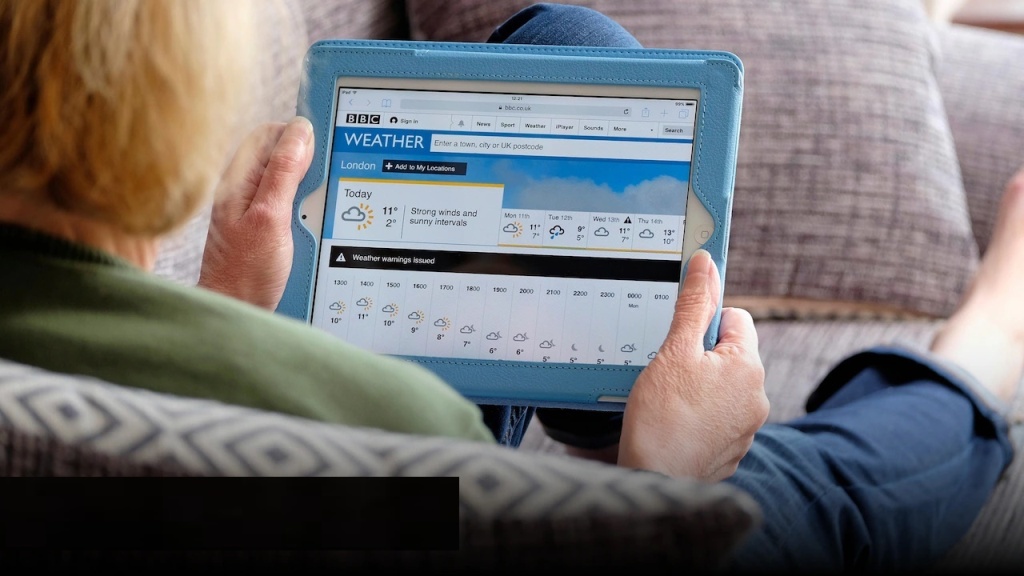
The announcement of the plan to work with the Met Office comes after the BBC’s own weather app wrongly predicted 13,000mph winds across the UK in 2024.

This error was blamed on a data issue with the US meteorological service, DTN.
In 2021, the BBC made a “Climate Content” pledge to create programming with more information on climate change that would inspire audiences to make “greener choices”.
It began a process of embedding climate-related messaging into popular programmes.
Climate message in BBC programming
A 2024 report into the progress of this project stated: “The BBC has found opportunities to authentically embed sustainability themes into its content, from blockbuster natural history titles such as Asia, which launched this autumn, to gripping climate thriller On Thin Ice: Putin v Greenpeace.
“And even in coverage of the world’s biggest sporting event, the Olympics.”
The report added that programme-makers would continue their “commitment to finding audience-relevant ways to reflect sustainability” in BBC output “across all genres”.
Penny Endersby, the chief executive of the Met Office, said of the new partnership with the BBC: “As the UK’s national weather service, we are excited to be back working closely with the BBC again.
“Together we can reach even more people with essential weather information, helping them to plan their days, stay safe when it matters and keep well-informed in our changing climate.”
Original source: https://www.telegraph.co.uk/news/2025/07/30/bbc-and-met-office-team-up-to-tackle-weather-disinformation/