


After a brutal electoral collapse, Labour is tearing itself apart – reviving old wars and betting its future on a desperate leadership stunt
The existential crisis that recently engulfed the British Labour Party has intensified over the past week, and it is now clear that the party is facing political extinction.
Two weeks ago, British voters showed their contempt for Labour, after enduring two years of scandal-ridden and ineffective government. The party lost almost 1,600 local council seats; ceded control of the Welsh parliament for the first time ever; and performed very poorly in Scotland.
The Labour Party has responded to this unprecedented electoral drubbing by engaging in an unseemly orgy of political infighting that will continue for months to come.
Within days, some 90 MPs announced that they no longer had faith in Keir Starmer as prime minister – and five cabinet members resigned, including Wes Streeting, the health secretary, who had been maneuvering to depose the unpopular Starmer for some time.
Streeting, however, declined to challenge Starmer for the leadership because he could not muster the support of the necessary 81 MPs to do so.
A week later, Streeting delivered an extraordinary speech in which he announced that he would contest the leadership when Starmer was eventually challenged, described Starmer’s ascension to Labour leadership as “dishonest” and astonishingly urged Britain to re-join the European Union – thereby reviving the divisive Brexit issue that has poisoned British politics for over a decade, and had previously split the Labour Party.
Streeting, by injecting Brexit into the Labour leadership contest, has ensured that it will become much more divisive and bitter that it otherwise would have been. One Labour minister has already condemned Streeting for “re-opening the Brexit wars.”
Other potential challengers – Angela Rayner and Ed Miliband – have also declined to challenge Starmer at this stage, and the unpopular Starmer appears determined to remain prime minister for the present.
This strange political impasse then provoked the ambitious mayor of Manchester, Andy Burnham, to launch a prospective challenge against Starmer. Burnham, however, cannot challenge at present as he is not in parliament – because earlier this year Starmer refused to endorse him as a candidate in a by-election in a safe Labour seat, that was subsequently won by the Greens.
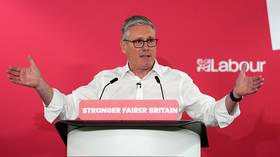
Then, last week a young MP in the Manchester seat of Makerfield, Josh Symons, resigned from parliament so that Burnham could contest the resulting by-election (due to be held on June 18), win a seat in the Commons, and then challenge Starmer for the prime ministership. After defeating Starmer, Burnham would then have three years to win back those millions of voters that have recently deserted Labour, and lead Labour to victory in the 2029 general election.
This is the Machiavellian plan concocted by the apparatchiks that currently control the Labour Party – and Streeting, Rayner, and Miliband have, for the time being, acquiesced in it, no doubt expecting to be suitably rewarded with cabinet appointments if and when Burnham becomes prime minister.
There are, however, numerous, insuperable difficulties confronting this high-risk strategy.
Burnham is by no means certain to win the by-election that has been gifted him. He is currently a very popular mayor of Manchester, but at the recent council elections Reform won every ward in the Makerfield electorate – and voters may well take a dim view of their local member being edged out so as to allow Burnham to make a bid for the prime ministership.
In 1965, Prime Minister Harold Wilson engineered a similar piece of by-election spivery when Patrick Gordon Walker, who was slated to become foreign secretary, surprisingly lost his seat at the general election that brought Wilson to power a year before. Wilson subsequently arranged by-election in a safe Labour seat – in which voters refused to elect Walker.
Makerfield is a white working-class electorate that voted overwhelmingly in favor of leaving the EU at the Brexit referendum in 2015 and is staunchly anti-immigrant. Josh Symons won the seat at last year’s election with a majority of 5,300 votes over the Reform party candidate.
Reform leader Nigel Farage has promised to “throw the kitchen sink” at Makerfield, and the party will campaign on the key issues of Brexit (thanks to Streeting) and immigration. Burnham – who is previously on record as wanting to reverse Brexit, and has this week been branded “open borders Burnham” by Farage – is vulnerable on both of these issues.

Nor should it be forgotten that when Burnham was a MP (he was the member for Leigh between 2001 and 2017) he was twice decisively defeated in leadership ballots – once by Ed Miliband and once by Jeremy Corbyn.
Even if Burnham wins in Makerfield he may not win the leadership contest – Streeting and perhaps others will be candidates – that will ultimately be decided by Labour Party members, rather than the elected Labour MPs or the party’s ruling cadre.
More importantly, even if Burnham wins the by-election and becomes prime minister, does anyone believe that voters will not punish Labour for the lengthy, divisive and self-indulgent leadership contest now in train that resulted in him becoming prime minister?
The absurdity inherent in the plan to make Burnham prime minister was highlighted this week when David Lammy, the deputy prime minister, announced that both he and Starmer would campaign for Burnham in Makerfield.
The plan to install Burnham as prime minister also seriously underestimates the rage and contempt that British voters have for politicians in general, and Labour politicians in particular – and voters are more than capable of derailing it.
The unsavory political infighting that Labour has engaged in over the past few weeks, which can only intensify over the next few months, has, in my view, already condemned the party to political oblivion – in much the same way that the tawdry and protracted leadership contest that resulted in Liz Truss becoming prime minister signaled the demise of the Conservatives as a viable mainstream party.
More to the point, does anyone really believe that Labour is capable of formulating and implementing a political program that would carry it to an election win in 2029?
If Streeting’s foolish suggestion that Brexit be reversed – surely a political gift to the Reform Party that not even Farage could have anticipated in his wildest dreams – is indicative of Labour’s new policy direction, then the party is beyond saving.

Nor do Burnham’s recent policy pronouncements – “I will fight for justice and ordinary people”; “we need to reverse deindustrialization”; and “we need more public ownership” amount to a credible political program that the divided Labour Party can coalesce around, let alone expect to win an election with.
Burnham’s economic views mirror those of Jeremy Corbyn – and Corbyn’s economic agenda was decisively rejected by the electorate at the 2019 general election, won in a landslide by Boris Johnson, and again in 2024 when Starmer won a large majority on an explicitly anti-Corbynite program.
By what miraculous process is Burnham going to persuade the electorate to vote for a big spending economic agenda that it has resolutely rejected at the last two general elections?
And how, one might ask, does Burnham propose to convince the more than 250 MPs who are still committed to Starmer’s cautious technocratic agenda to embrace a program based upon reindustrialization, nationalization, and increased government spending? Even if Burnham were to win Makerfield by a large margin, this would not have given him a mandate to implement a radical political program of this kind.
But Burnham’s difficulties do not end there.
Burnham’s crude working class persona may play well with voters in Greater Manchester – but he does not have the same appeal to the disenchanted British electorate at large, or, indeed, to many displaced workers in the north (Burnham’s own constituency) who have been voting for Reform in ever increasing numbers in recent years.
Burnham may be “the King of the North” but he is an unimpressive political messiah – even though his career may well end in his electoral crucifixion – and Labour’s desperate plan to install him as prime minister is, in my view, a gross political miscalculation based upon wishful thinking.

The chaos that has engulfed Labour in the past few weeks was by no means inevitable.
Starmer could have resigned with a modicum of dignity, and a new leader could have been appointed without the need for a protracted and divisive election process. The party could have drafted a genuinely reformist political program, implemented it – with its massive majority in the Commons – over the next three years, and had at least some chance of being re-elected in 2029.
The current Labour Party leadership was, however, incapable doing any of these things – in large part because Starmer and those ambitious politicians who are now seeking to depose him are completely lacking in political judgment, and the party itself is utterly bereft of credible ideas and basic political proficiency.
In this regard, Labour has come to resemble the moribund Conservative Party, and, in my view, is doomed to suffer a similar fate.
In a recent interview, political commentator Peter Hitchens described the Conservative and Labour Parties as “corpse parties” – an apt description of the two ailing major mainstream political parties that once dominated British politics.
With the Labour Party’s imminent demise – which will be pathetically played out over the next few months – that era is now coming to a chaotic and ignominious end.

