


UK’s AI ‘Murder Prediction Tool’: A Step Toward a ‘Minority Report’ Future?
By Kakali Das
Have you ever watched the movie Minority Report? It hit the screens back in 2002, and even though it’s been a while, its themes remain as relevant and thought-provoking as ever.
Set in the year 2054, the film follows a detective named John Anderton who works for a futuristic law enforcement unit known as PreCrime.
This elite department uses the abilities of three psychics—known as “Precogs”—to foresee crimes before they happen, allowing the authorities to arrest would-be murderers before they can act.

Anderton is a firm believer in the system, convinced that it’s flawless and saves lives. But everything changes when the Precogs predict that he himself will commit a murder in the near future. Suddenly, the hunter becomes the hunted, and Anderton is forced to go on the run to uncover the truth and prove his innocence.
What follows is a gripping exploration of free will versus determinism, the ethical limits of surveillance, and whether it’s justifiable to punish someone for a crime they haven’t yet committed. Minority Report isn’t just a sci-fi thriller—it’s a philosophical dive into the nature of justice and choice in a world dominated by technology.
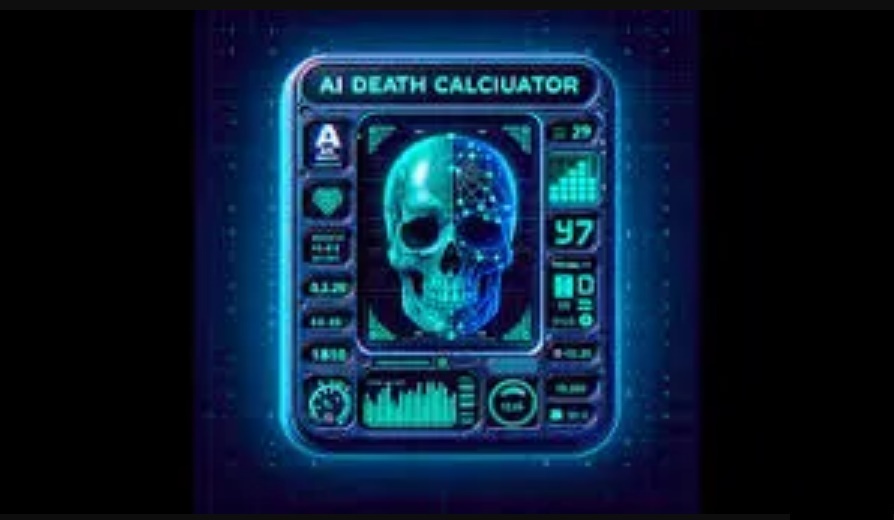
But similar events are no longer confined to science fiction. We are now in 2025, and we are witnessing such developments unfold in real life. The key difference? Instead of psychics, law enforcement is turning to Artificial Intelligence. Take the United Kingdom (UK) for example, where the government is developing a real-life “Murder Prediction Tool.”
This system will analyse police and government databases to assess how likely it is for an individual to commit a violent crime in the future. The UK’s Ministry of Justice believes that this could enhance public safety and prevent crimes before they happen. But will it truly make society safer? Or are we venturing into ethically murky waters where prediction may replace due process?
According to a UK-based Freevacy, the project is expected to collect up to 500,000 individual records. This includes not only the personal data of convicted offenders, but also that of victims and even witnesses of crimes.
The AI tool will gather sensitive information such as names, gender, date of birth, ethnicity, and health-related details. For instance, if someone struggles with addiction or experiences suicidal thoughts, the system will have access to that data. Using this information, the AI will attempt to identify individuals deemed at risk of committing serious violent crimes — including murder.
What could possibly go wrong? Experts haven’t hesitated to answer. Many have described the tool as both “chilling” and “dystopian,” raising serious concerns about privacy, ethics, and the potential misuse of such powerful predictive technology.
And there are three major concerns surrounding this program. First, the system will process highly sensitive personal data—not just of convicted individuals, but also of innocent people and those who have turned to the police for protection or support. Like most technological systems, this AI program is vulnerable to glitches, data breaches, and misuse, raising serious questions about privacy and the potential violation of citizens’ rights.

We’ve already seen a similar example in China, where law enforcement uses AI to predict not just crimes but also public dissent. The system flags individuals whose behaviour is deemed “suspicious.” And what qualifies as suspicious? In one instance, simply a person with a mental illness approaching a school was enough to trigger an alert.
Reports indicate that this tool is also being used to target migrant workers in the UK, highlighting the second major risk. Experts warn that the AI algorithm could develop inherent biases, which would ultimately distort the crime predictions it generates.
You’ve likely heard the saying – “Artificial intelligence systems are only as good as the data they’re fed.” Research consistently shows that the UK police force has a history of institutional racism, meaning the data it uses may perpetuate these biases. Campaigners fear that the AI system could codify this bias, leading to the profiling of individuals from minority and low-income communities as potential criminals.

The third major risk—like with most AI applications—is accuracy. We’ve seen this issue surface time and again. For instance, the facial recognition systems used by U.S. police have repeatedly failed to accurately identify Black faces. The UK police, facing similar challenges, now want to go a step further by predicting murders using AI. Understandably, this raises serious concerns.
That said, this isn’t to suggest that technology is inherently harmful. AI is already being employed by law enforcement agencies across the globe, and its potential is undeniable. It can revolutionize crime investigation—rapidly analysing massive datasets, spotting patterns, and uncovering links that would take humans days or weeks. In many ways, AI is like the perfect detective: tireless, efficient, and endlessly patient. It seems like a dream tool for any officer.
But is AI truly ready for a seamless leap into a pre-crime era? Sadly, the answer remains a firm and cautionary NO.
Original source: https://mahabahu.com/uks-ai-murder-prediction-tool/


