


The negotiations were allegedly interrupted after the Iranian delegation protested new threats by President Donald Trump
Negotiations between the US and Iran, mediated by Qatar and Pakistan, commenced on Sunday in the Swiss lake resort of Burgenstock. The meeting is the first round of talks aimed at reaching a final settlement to the war in line with a memorandum of understanding signed earlier this week.
The US was represented by Vice President J.D. Vance, as well as President Donald Trump’s special envoys, Steve Witkoff and Jared Kushner.
The Iranian delegation, led by Foreign Minister Abbas Araghchi and Parliament Speaker Mohammad Ghalibaf, included the head of the Iranian central bank, the deputy oil minister, and the chairman of the National Iranian Oil Company.
The talks were initially scheduled for Friday but were postponed after Israeli attacks on Lebanon. According to the Iranian Mehr news agency, Sunday’s negotiations were also halted some 80 minutes into the meeting, after Trump threatened to “hit Iran very hard again.”
What does Iran say?
According to Iranian Foreign Ministry spokesman Esmail Baghaei, the talks focused on ending the continued conflict between Israel and the Hezbollah militant group in Lebanon, as well as on lifting sanctions on Iranian oil exports and releasing the Islamic Republic’s frozen funds.
Hamid Bovard, the CEO of the Iranian state oil company, also told the nation’s IRIB news agency that the issue of oil exports was being “seriously pursued” at the meeting, adding that “nearly half of the country’s monthly oil exports have been shipped abroad” in “recent days.” A member of the negotiating team also reportedly stated that a draft proposal on temporary sanctions waivers for Iranian oil and its derivatives had been “completed.”
What triggered the Iranian backlash?
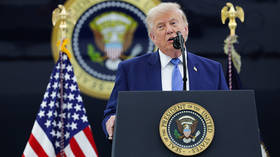
Earlier on Sunday, Trump demanded that Iran rein in Hezbollah, warning that the US would “hit Iran very hard again” otherwise. “Iran must immediately stop their… proxies in Lebanon from causing trouble,” he wrote in a post on Truth Social.
Ghalibaf hit back in a post on X, saying that Tehran counts American threats for nothing. “Don’t they think to themselves that if their threats had any effect, they wouldn’t have reached the point of despair today?” the official wrote, adding that Washington should be “careful with their statements,” lest the Iranian military respond. “Whatever they say, we are the ones who will act,” the parliament speaker said.
The Iranian delegation halted the talks in protest of Trump’s threats, according to the Tasnim news agency. Tehran is now considering “an appropriate response” to the American president’s actions, the agency stated, adding that the negotiations could also be halted until Israel withdraws from Lebanon.
What does the US say?
Vance told a news briefing in Burgenstock that the US and Iran had already made “great progress,” describing Washington’s position as an “outstretched hand” toward the people of Iran. He still maintained that Tehran must be “willing to give up being a driver of regional instability” and be “willing to give up nuclear weapons ambitions in the long term” for the US to be “willing to fundamentally transform our relationship with that country.”
The vice president also sought to downplay the risk of the talks being derailed by the continued hostilities in Lebanon, claiming that “great progress” had been achieved in recent days in ensuring the ceasefire between Israel and Hezbollah.
Trump told Fox News on Sunday that he had “a 60-day option and I can do whatever I want after that option.” He also warned Iranian President Masoud Pezeshkian, who had previously insisted that Tehran must retain the ability to enrich uranium, to “watch his mouth.”
“He better shape up or we’ll take over the rest of the country,” the US president said.
What is happening in Lebanon?
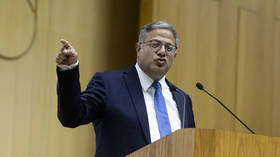
Israeli Prime Minister Benjamin Netanyahu told journalists on Sunday that West Jerusalem would keep its military inside southern Lebanon “for as long as it takes” and would not allow Iran to “arm itself with nuclear weapons,” regardless of “whatever the diplomatic developments may be.”
Hezbollah maintained the same day that it would not allow Israeli forces to remain in Lebanon, adding that the group would respond to any ceasefire violations. According to Lebanon’s Health Ministry, the strikes killed 105 people and injured more than 150 others on Friday and Saturday.
What happens next?
The negotiations are tense but not over yet, with back-channel contacts ongoing to potentially resume the talks on Monday.
A senior US diplomat involved in the negotiations has insisted that the “Iranians are still here and discussions are ongoing,” and that the US delegation expects “to work through the night.”
A source also told RT that the Iranian delegation is still at a hotel in Burgenstock.

