


The Reform UK leader’s manifesto attacks DEI and immigration, but beneath the outrage lies a thin program built on grievance and biology
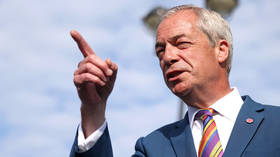
Nigel Farage, the leader of Reform UK, has published a lengthy personal manifesto on his Substack this week.
Farage is not noted for making detailed policy pronouncements, and his long-winded writeup provides an interesting insight into Reform’s policy agenda – revealing, as it does, both its intellectual and political shortcomings.
Farage’s manifesto is titled “Britain is a two-tier state – against white people” and it was clearly triggered by the recent Henry Nowak and Stephen Ogilvie cases, in which white British citizens were brutally attacked (and in Nowak’s case, killed) by a Sikh and a Sudanese respectively, neither of whom were illegal immigrants. Farage sets out in detail the circumstances surrounding the Nowak case, and his strident criticisms of the police are entirely valid.
Farage’s central contention is that white people in Britain are treated much less fairly than other ethnic groups, and that the mainstream political parties – he calls them “the establishment parties” – are unwilling to acknowledge the fact that “anti-White racism is embedded into the heart of the state” – because they created this state of affairs and are ideologically committed to maintaining it.
Farage sees the “ideology of Diversity, Equity and Inclusion (DEI)” and the Equality Act, passed by Labour in 2010 and subsequently strengthened by the Conservatives, as being the main culprits here, and argues that “every section of the state… has been ideologically compromised” by these “toxic ideologies.” According to Farage, this has created a less harmonious and less fair Britain.
Farage claims that this “two-tier state” has created a “two-tier market” in employment, social housing, education, the military, policing, and healthcare – which discriminates against white people, especially the young. Ominously, according to Farage, the situation can only get worse in the future – because while “White Brits” are a sizable majority at present, they “will become a minority in this country before the end of the century.”
Notwithstanding this bleak state of affairs, Farage nevertheless maintains that “there is reason for hope” because Reform “has the will and the ability to ensure that no young White person ever has to grow up feeling ashamed of who they are again.”
How precisely does Reform propose to bring about this miraculous social transformation?
Farage sets out a number of specific policy proposals that Reform proposes to implement if the party wins government, including the following:
- abolish the Equality Act and prohibit national and local government bodies from implementing DEI policies;
- prevent foreign nationals from having access to welfare benefits;
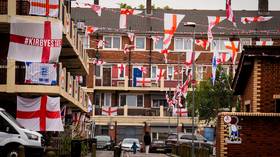
- ensure that students receive a “balanced and patriotic education” and compel every school to “fly the Union flag” and prominently display a picture of the King;
- restore pride to Britain’s armed forces.
The flimsiness of these policies is obvious, and even if they were implemented, they would do little or nothing to alleviate the serious and longstanding problems that bedevil contemporary Britain – including a declining economy, the cost-of-living crisis, a ballooning public debt, and rising crime rates.
Liberal commentators have long been critical of the Equality Act and illiberal ideologies like DEI – and Farage is correct to condemn them and point out how destructive they are of social cohesion. But, even here, Farage underestimates how difficult it will be to abolish them. Britain is still bound by the EU Human Rights Act and a raft of other EU laws, and the UK Supreme Court will fight tooth and nail to retain the status quo.
Farage also underestimates how near impossible it is in a Western democracy to take away privileges from specific groups that they have enjoyed for decades – and any attempt to do so on the scale proposed by Farage would provoke unprecedented protests and civil unrest.
How Farage intends to restore the pride of Britain’s armed forces in circumstances where the country cannot afford to properly fund its military or meet its escalating NATO commitments is not clear.
Nor is it clear how hanging up pictures of King Charles would increase literacy rates in British schools or improve the dastardly poor quality of education that they have dished out for the last 40 years or so.
In fact, the shortcomings of Farage’s policy proposals are readily apparent – and they derive from the crude biologism at the heart of his intellectual worldview.
Farage is essentially a nostalgic conservative whose analysis of society is based upon crude biological categories – in his case ill-defined ethnic groups. The fundamental distinction he draws between “White Brits” and all other ethnic groups is, for example, simply absurd. Many non-British ethnic groups are in fact just as white as Farage’s Brits. And if Farage is really complaining about cultural differences – as he sometimes insists – why mention skin color at all?
Farage wants to explain all the ills that he sees as afflicting modern Britain as having been caused by ethnic groups that do not fall within the “White Brits” category. For example, he makes the extraordinary statement that “Britain was not an unequal society in 2009” – apparently inequality only appeared after the passage of the Equality Act in 2010 and with subsequent mass immigration.
This, of course, is simply a species of magical thinking based upon crude ethnic prejudice. Farage, for example, correctly makes much of knife crime – but do “White Brits” never commit knife crimes, or indeed, any crimes at all?
In fact, Farage shares his crude biologism with the woke elites that he so vociferously criticizes and condemns – paradoxically they too utilize the same vague biological categories that he does, although for precisely the opposite purpose.
Whereas the woke elites wish to destroy the old liberal Britain (which they, like Farage, define as white) and confer privileges on elites from ethnic communities, Farage wants to restore that lost white Britain, abolish ethnic privileges and redistribute them to “White Brits.”
Neither side of this debate is explicitly ‘racist’ in the genuine sense of that term – although both parties regularly level this charge at the other.

Nevertheless, both Farage and his woke opponents, just like real racists, each explain social and economic problems by means of biological categories and are, therefore, unable to properly comprehend the real causes of these problems. And, because of their shared deep-seated economic conservatism they are unable to formulate effective remedies for them. Farage, much like his woke elite opponents, has forsaken genuine analysis for biological fables.
Farage’s crude biologism has another strange consequence – it leads him to cast his “White Brits” in the role of victims of racial prejudice, in precisely the same way that his woke elite opponents cast ethnic groups when they first developed the illiberal and divisive ideologies that Farage now condemns.
It is unlikely that Reform’s political prospects will be damaged by Farage’s flawed manifesto. Most Reform supporters will eagerly lap up Farage’s crude biological analysis, placing their faith in his utopian promise to restore a Britain where “White Brits” felt innately superior to their ethnic neighbors, were proud of their army and navy, and ruled an empire upon which the sun never set.
The main problem for Farage and Reform at present is that the party’s poll figures have stalled at around 30% nationally for the past few months – a figure insufficient to win enough seats for the party to form government. Also troubling is the recent emergence of the Restore Party on Reform’s right flank.
In fact, Farage’s manifesto may well have been published in order to lure the more extreme Restore voters back into the Reform fold.
Things will become clearer after Friday’s Makerfield by-election – a seat that, if Andy Burnham were not the candidate, Reform would be expected to win easily. The situation in Makerfield is further complicated by the fact that the Reform candidate lacks charisma as well as political judgment, and in the latest polls Restore is polling around 8% – to Burnham’s 45% and Reform’s 40%.
Nigel Farage will no doubt be hoping for a win in Makerfield – which would, unlike his manifesto – give Reform a much-needed boost in the polls.
The statements, views and opinions expressed in this column are solely those of the author and do not necessarily represent those of RT.


